
Table of Contents
Kansas City BBQ: Brisket Burnt Ends and Backyard Drumsticks
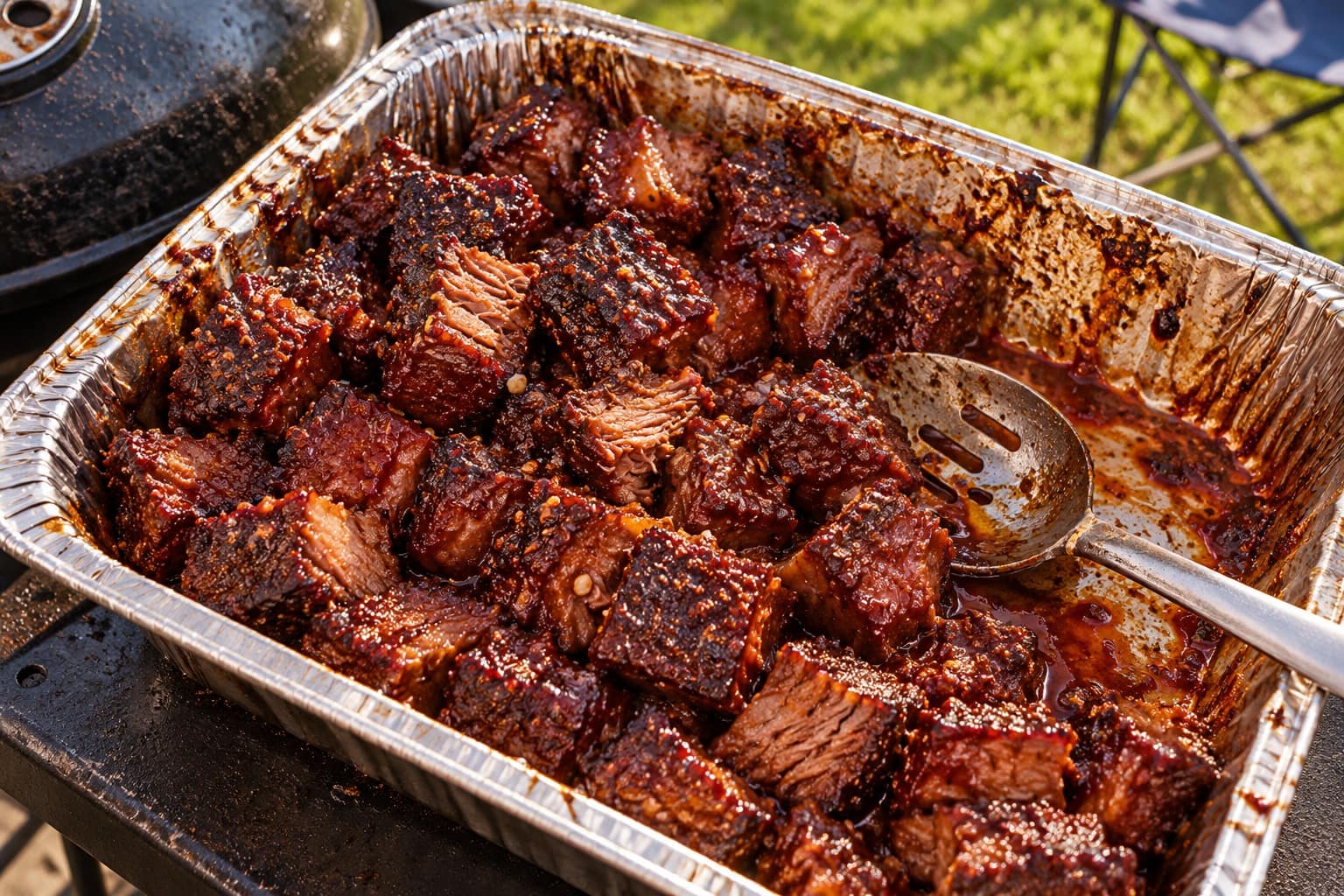
A pan of burnt ends beside the smoker gives people a reason to linger. The pieces are smoky, tender, dark at the edges, and just sticky enough to call for napkins. Start with Kansas City BBQ, Dry Rub Seasoning and a brisket point, then keep the same bottle ready for an evening batch of glazed drumsticks. These recipes are amazing!
Burnt ends have a strong connection to Kansas City barbecue. This recipe uses the fattier point rather than cubing a lean flat or substituting another roast. The second recipe brings the same warm paprika, garlic, cumin, coriander, pepper, and herb character to chicken, with a thin sauce finish near the end of grilling.
The recipes share a jar, not a presentation. Burnt ends finish in their cooking pan and can be served from it. The drumsticks get their glaze on the grill as the evening settles in. Both should look like food being cooked and shared, with flavor underneath the sauce.
A cooked-in rub, then a measured sauce finish
Kansas City BBQ contains sea salt and some sugar. Coat the meat before cooking and keep extra salt out of the first batch. For the burnt ends, the second cook sets the sauce around the beef; it does not need a fresh layer of salty rub. On chicken, wait until the last few minutes to brush the glaze.
Classic cook · smoke, cube, and return to the pit
Kansas City Brisket-Point Burnt Ends
The brisket point has enough fat and connective tissue to handle a second cook. Smoke it until tender, then cut it into roughly similar chunks and return the pieces to the smoker with a measured amount of sauce.
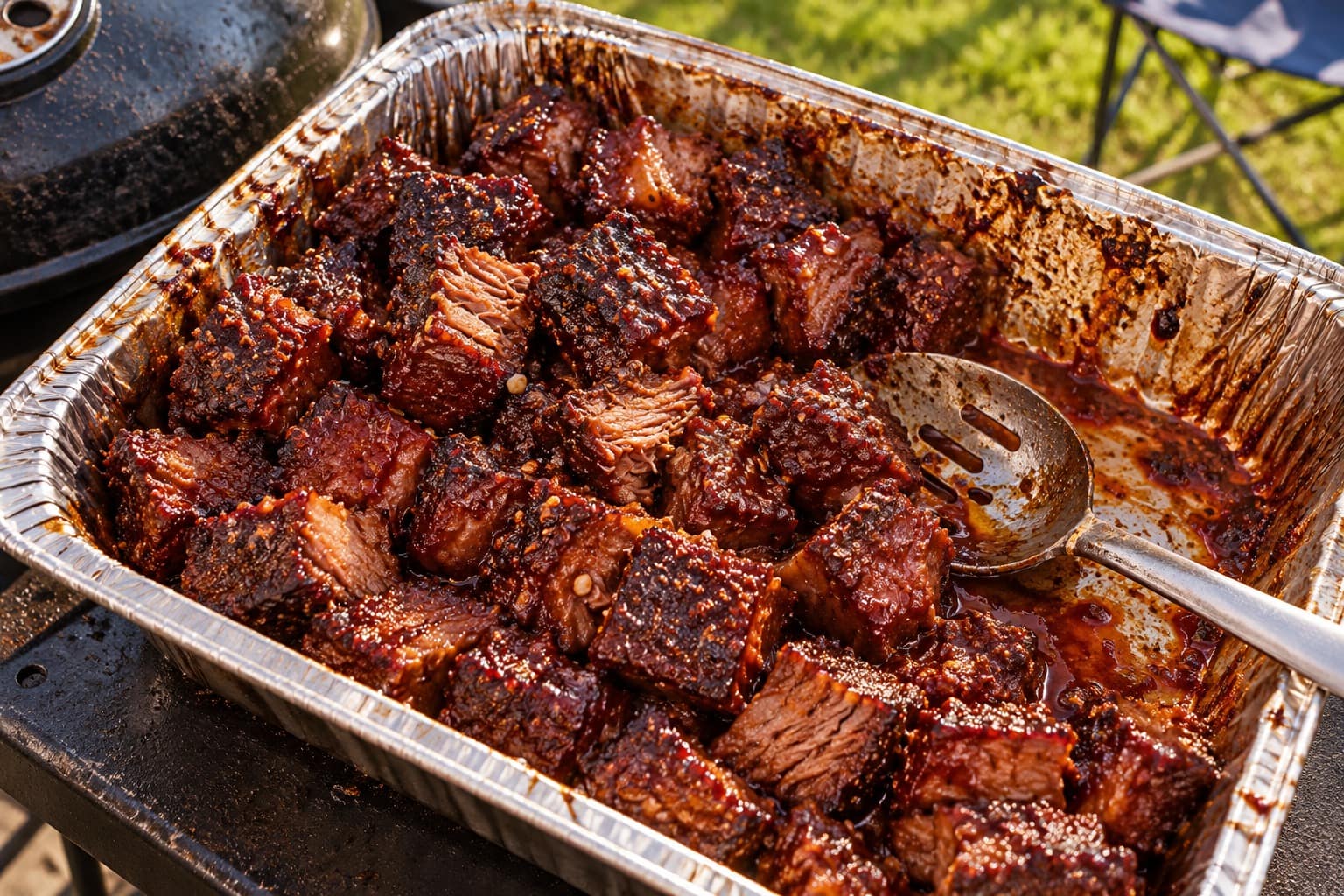
Kansas City Brisket-Point Burnt Ends
Featuring: Kansas City BBQ, Dry Rub Seasoning
Equipment: Smoker, thermometers, heavy-duty foil, shallow grill-safe pan
The starting ratio: ¼ cup rub for a 4-pound trimmed brisket point; ¾ cup sauce and ¼ cup reserved juices for the second cook.
Ingredients
For the beef
- 1 beef brisket point, about 4 pounds after trimming; retain a modest fat cap
- ¼ cup Kansas City BBQ, Dry Rub Seasoning
- 1 tablespoon yellow mustard, as a binder
- ½ cup unsalted beef broth
For the pan finish
- ¾ cup tomato-based barbecue sauce
- ¼ cup reserved skimmed brisket juices, or unsalted beef broth
Instructions
- Prepare the point. Set a smoker for indirect cooking at 250°F. Trim very thick hard fat, leaving about ¼ inch on exposed fat-covered areas. Pat dry, brush with mustard, and coat all sides with the rub.
- Smoke and wrap. Smoke until the bark is set and the center is roughly 165–175°F, often about 3–4 hours. Place on heavy-duty foil, add the ½ cup broth beside the meat, and wrap tightly. Continue at 250°F until a probe enters with little resistance, commonly around 200–205°F. This first cook may take 6–9 hours total.
- Rest and cut. Rest wrapped for 30 minutes, then open carefully and reserve the juices. Skim the fat. Cut the point into approximately 1½-inch chunks, trimming any large unrendered fatty pieces. Similar size helps even cooking; sharp perfect cubes are unnecessary.
- Finish in the pan. Increase the smoker to 275°F. Toss the beef with ¾ cup sauce and ¼ cup skimmed juices in a shallow grill-safe pan. Cook uncovered for 45 minutes, turning once halfway through, until the sauce clings and the edges are dark. If still too wet, continue in 10-minute increments.
- Serve hot. Let the pan settle for a few minutes and serve with a clean spoon. The beef is already seasoned, so do not add another coat of dry rub.
Start with a real brisket point. Chuck-roast “burnt ends” can be enjoyable, but they are a different recipe and need their own schedule.
Recipe notes
Tenderness decides when the first cook is done; the time range is not a deadline. The sauce adds salt as well as sweetness, so choose one you enjoy and keep the second coating modest.
Serve it with
Serve with pickles, slaw, bread, and beans. The cooking pan belongs on a heat-safe surface where people can help themselves.
Second use · poultry with a late sauce finish
Kansas City BBQ Glazed Chicken Drumsticks
Drumsticks give the same rub a faster, family-sized job. Steady indirect heat cooks the meat while a late brushing of sauce adds shine without spending the entire cook over the fire.
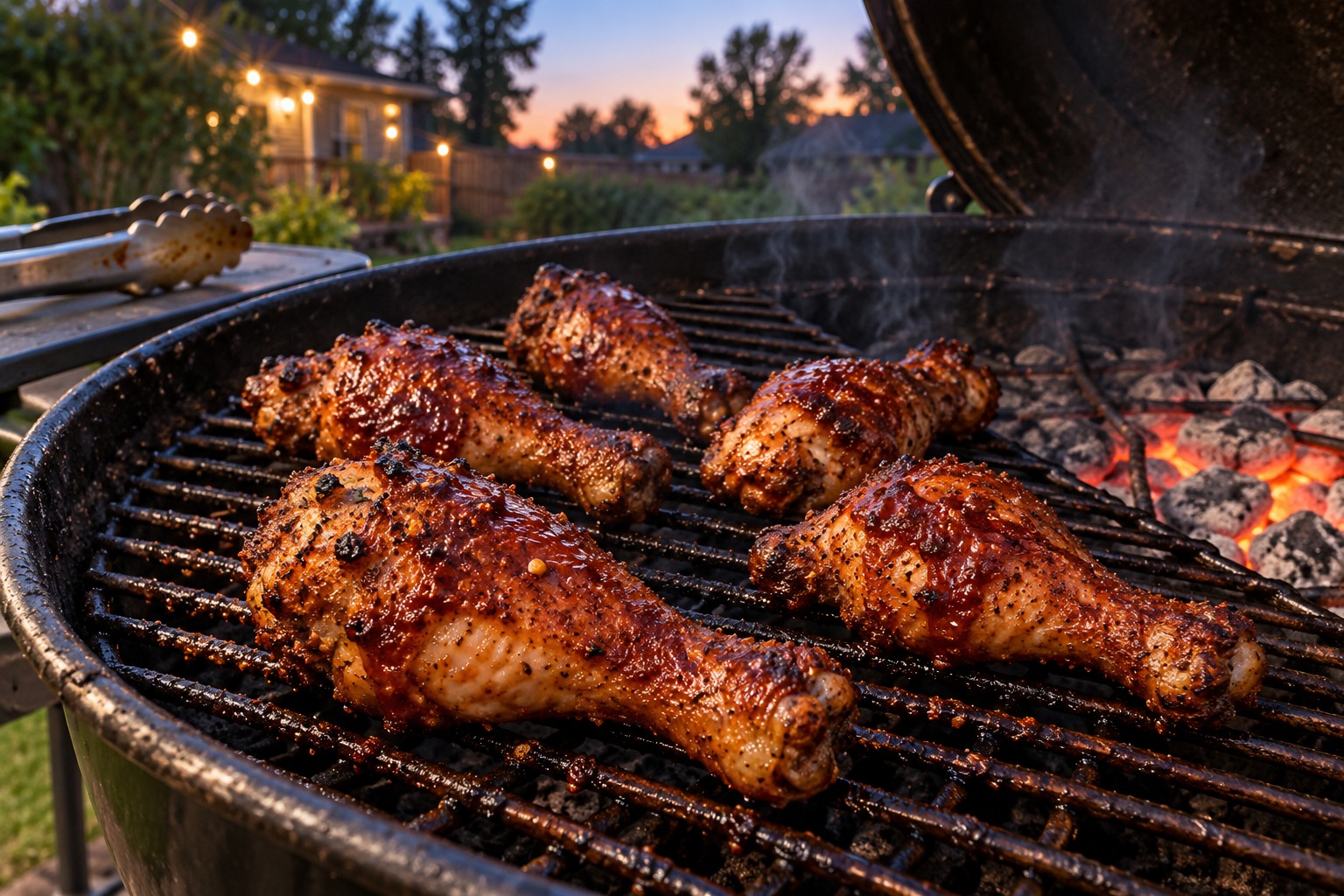
Kansas City BBQ Glazed Chicken Drumsticks
Featuring: Kansas City BBQ, Dry Rub Seasoning
Equipment: Covered grill with indirect zone, basting brush, meat thermometer
The starting ratio: 2½ tablespoons rub for 2½ pounds drumsticks; ¾ cup sauce divided between glazing and serving.
Ingredients
For the chicken
- 8 chicken drumsticks, about 2½ pounds total
- 2½ tablespoons Kansas City BBQ, Dry Rub Seasoning
- 1 tablespoon neutral oil
- ¾ cup tomato-based barbecue sauce, divided
Instructions
- Set up two zones. Prepare a covered grill with a steady indirect zone around 350–375°F and a direct-heat zone available if needed. Keep the indirect area free of flame beneath the chicken.
- Oil and rub. Pat the drumsticks dry. Toss with oil, then the measured rub. Arrange in the indirect zone with space between pieces and close the lid.
- Cook evenly. Grill for about 40–50 minutes, turning at roughly 15 and 30 minutes. Check the largest pieces in the thickest meat, away from bone. All must reach at least 165°F.
- Glaze near the end. Reserve ¼ cup sauce in a clean serving dish before basting. During the last 8 minutes, brush the chicken with the other ½ cup in two thin layers. Continue over indirect heat until the coating sets and the temperature is reached. Avoid moving a sugary glaze over an active flame.
- Rest and serve. Rest for 5 minutes and serve with the clean reserved sauce. Use clean tongs for the finished chicken.
Two thin sauce layers set more neatly than one heavy coat. If the glaze darkens too quickly, move the chicken farther from the heat and finish gently.
Recipe notes
A thermometer is more reliable than the color around a drumstick bone. If you prefer, bake on a rack in a 400°F oven for about 40–50 minutes and apply the sauce during the final 8 minutes; still check every piece for 165°F.
Serve it with
Serve with corn, potato wedges, and a crunchy salad. The glaze makes these approachable while the seasoning gives them more depth than sauce alone.
Let the smoker pan do the serving
Bring clean tongs for the drumsticks and a serving spoon for the burnt ends. Whether the cook lasts all day or just part of the evening, this jar gives the meat a foundation that does not depend on perfect slicing or a heavy sauce coating.
Explore Kansas City BBQ, Dry Rub Seasoning
Regional inspiration: Visit KC: Kansas City barbecue and burnt ends.
Kansas City BBQ - Dry Rub Seasoning
$10.50
When the smoker's fired up and a serious piece of meat is waiting its turn, reach for a rub that knows its way around barbecue. Kansas City BBQ, Dry Rub Seasoning brings paprika, garlic, coriander, cumin, mustard, black pepper, herbs, and… read more

FAQs
Kansas City BBQ is famous for sweet and tangy sauces, so why isn’t this rub packed with massive amounts of sugar?
We left out the sugar overload on purpose so this rub can complement your favorite KC-style sauce instead of battling it for dessert status. Let the savory blend of coriander, cumin, and mustard do the heavy lifting while your sauce handles the sweet talking.
The label says "BBQ," but can I use it on something that has never seen the inside of a smoker?
Absolutely, because this bottle has way too much pitmaster attitude to be cooped up in a smoker all day. Shake it over your potato salad, use it to rescue boring deviled eggs, or give some backyard backbone to a plate of grilled shrimp.
There are herbs like thyme, sage, and oregano in here—are you making barbecue or a Thanksgiving dinner?
Think of it as a smokehouse masterpiece with a sophisticated side hustle. These earthy herbs and warm spices keep the flavor complex from the first whiff to the final bite, ensuring your brisket never tastes boring.