
Table of Contents
St. Louis Backyard Barbecue: Mopped Ribs and Saucy Pork Steaks
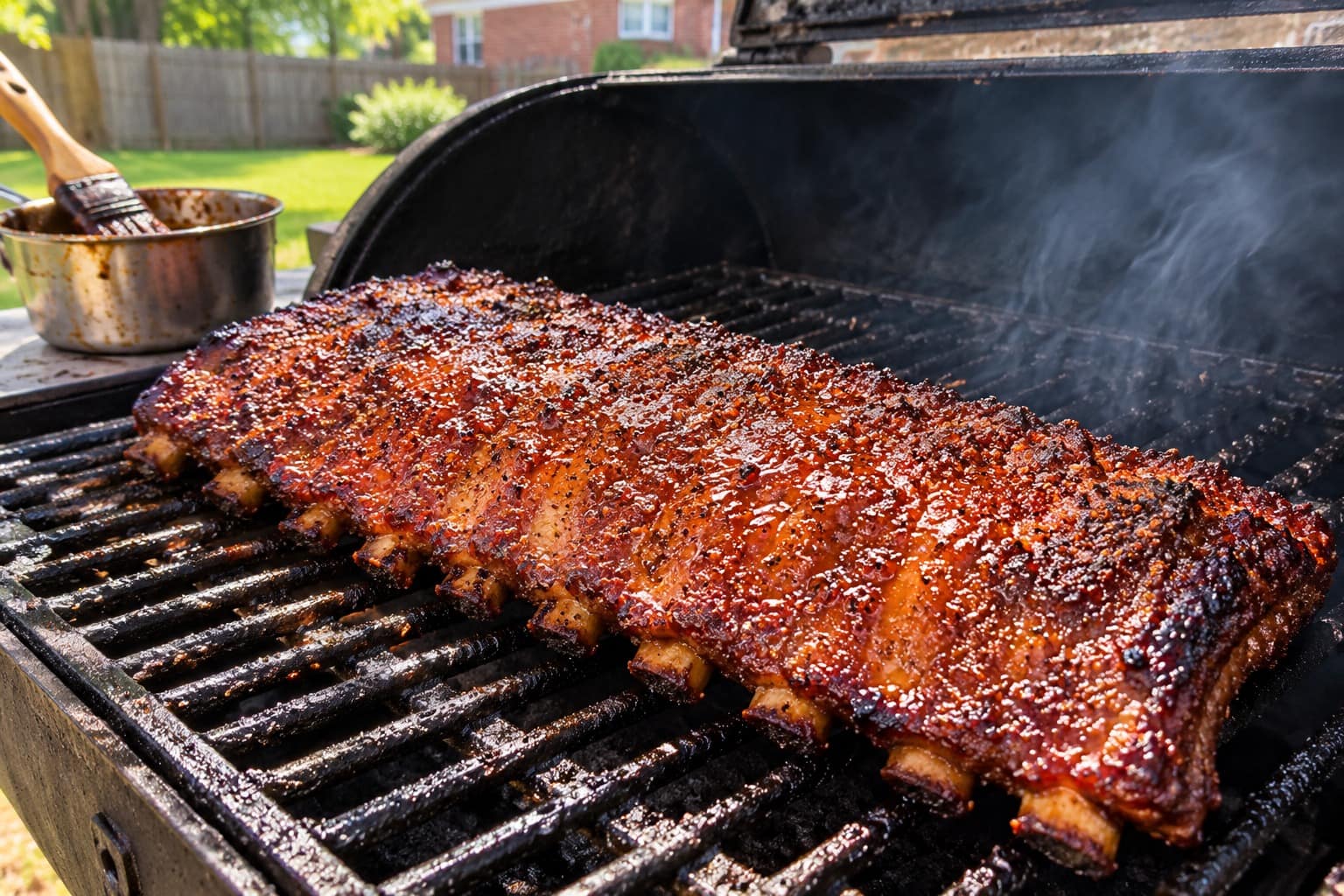
The lid comes up, a little smoke drifts into the summer light, and a rack of ribs is just beginning to gleam from its latest mop. That is a fine way to spend a St. Louis-style barbecue afternoon. These recipes start with St. Louis Ribs, Dry Rub Seasoning, give the meat steady heat, and let the neighborhood wonder what smells so good.
This pair of recipes keeps the backyard in mind. First comes a whole rack of St. Louis-cut spare ribs with an apple-cider mop. Then come pork shoulder steaks, grilled for color and gently finished in a pan of tangy sauce. Pork steaks have a place in St. Louis cookout culture, and they give this jar another job beyond the rib rack.
Brown sugar, paprika, smoked salt, onion, garlic, ancho, and pepper bring sweet, smoky depth, while celery and fennel keep the flavor interesting. Neither recipe needs a heavy extra layer of dry seasoning after cooking. The flavor develops on the meat, in the mop, and in the cooking juices.
A rack, a mop cup, and an afternoon outside
The rub already contains sea salt and smoked salt, so both recipes begin without extra salt. On the ribs, give the coating time to set before mopping; repeated soaking early in the cook can wash it away. For the pork steaks, the direct heat is only the beginning. Shoulder meat becomes tender during the slower, covered finish.
Classic cook · whole ribs in the smoker
Backyard Smoked St. Louis Ribs with Apple-Cider Mop
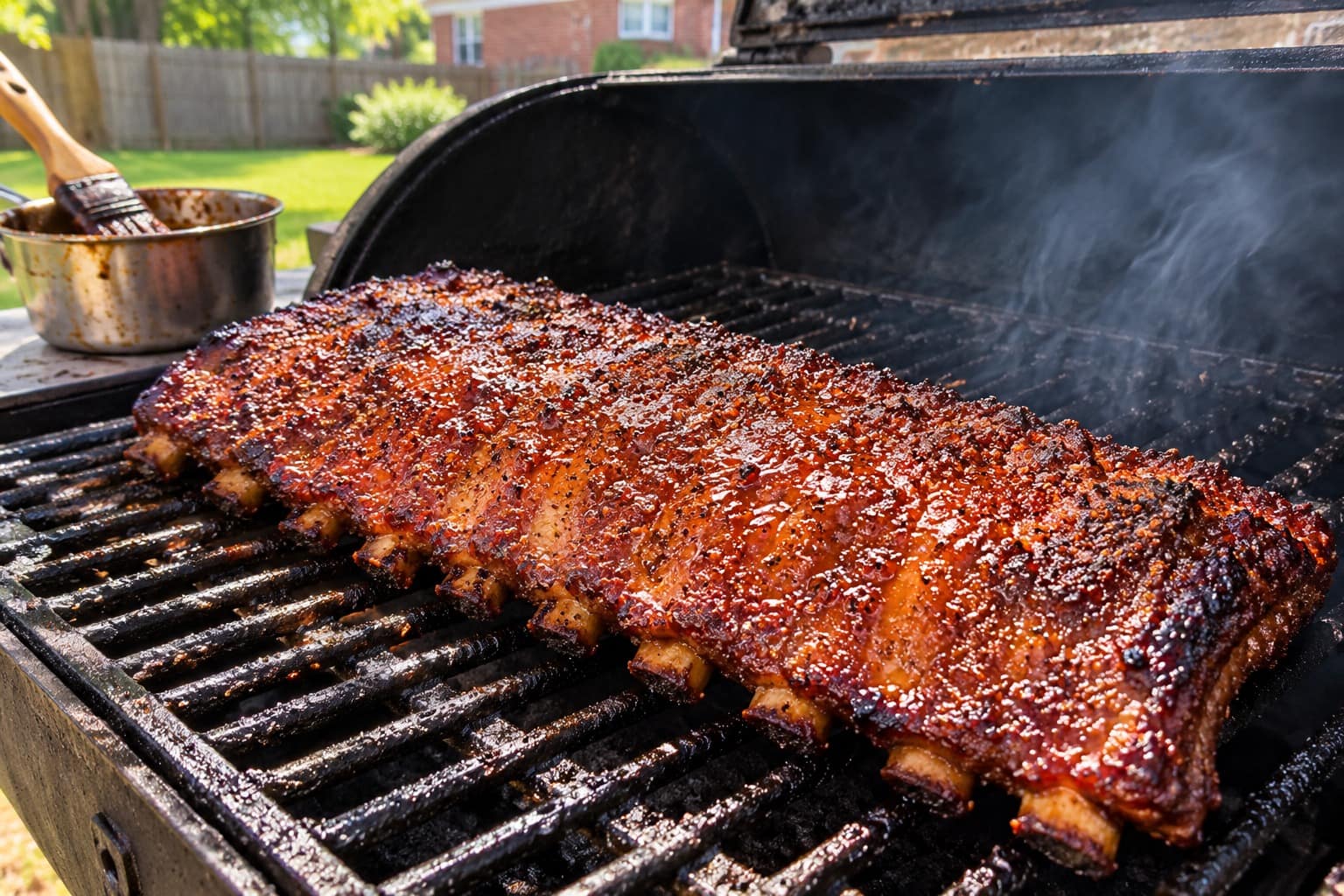
These ribs stay whole during the cook. The mop moistens the set crust and gives it a natural sheen, while a little extra rub in the mop keeps the flavor connected from the first coating to the last hour.
Backyard Smoked St. Louis Ribs with Apple-Cider Mop
Featuring: St. Louis Ribs, Dry Rub Seasoning
Equipment: Smoker or covered grill, thermometer, mop brush, clean saucepan and working cup
The starting ratio: 4 tablespoons rub total: 3 on a 3-pound rack and 1 in 1 cup apple-cider mop.
Ingredients
For the ribs
- 1 rack St. Louis-cut pork spare ribs, about 3 pounds
- 3 tablespoons St. Louis Ribs, Dry Rub Seasoning
- 1 tablespoon yellow mustard, as a binder
For the mop
- 1 tablespoon St. Louis Ribs, Dry Rub Seasoning
- ½ cup unsweetened apple juice
- ¼ cup apple cider vinegar
- ¼ cup water
Instructions
- Get the smoker steady. Prepare a smoker or covered grill for indirect cooking at 250°F, using smoking wood according to the equipment instructions. Remove the rib membrane if present and trim loose fatty flaps. Pat dry.
- Coat the whole rack. Brush both sides with mustard and distribute 3 tablespoons rub across the rack. Place meat-side up, away from direct flame, and close the lid.
- Prepare a clean mop. Combine the apple juice, vinegar, water, and 1 tablespoon rub in a small saucepan. Simmer for 2 minutes, stirring. Keep this mixture separate from the tools used on raw meat.
- Let the bark set, then mop. Cook undisturbed for about 2 hours. When the coating no longer wipes away easily, brush on a light layer of mop. Repeat roughly every 45–60 minutes, only where the surface looks dry. Pour a little mop into a separate working cup rather than returning a used brush to the clean saucepan.
- Finish for tenderness. Begin testing around 4½ hours. A skewer should enter easily between bones and the rack should bend readily. Meat commonly reaches about 195–203°F between bones when tender. Continue in 20–30-minute increments as needed. A light final mop can go on during the last 15 minutes of cooking.
- Rest before serving. Rest for 10 minutes, then cut between bones. The rack needs no finishing dusting of uncooked rub. Discard mop left in the working cup.
A mop is a light coating, not a bath. Keep the lid closed between applications so the smoker holds its temperature.
Recipe notes
The picture shows a mid-cook moment, not a carving platter. Thickness, weather, and equipment change the schedule. If the ribs still resist the skewer, they need more time even if a thermometer has reached the usual range.
Serve it with
Put slaw, beans, and corn on the table and let the rack be the centerpiece. A little sauce can be offered separately if your crowd likes it.
Second cut · grill first, then braise
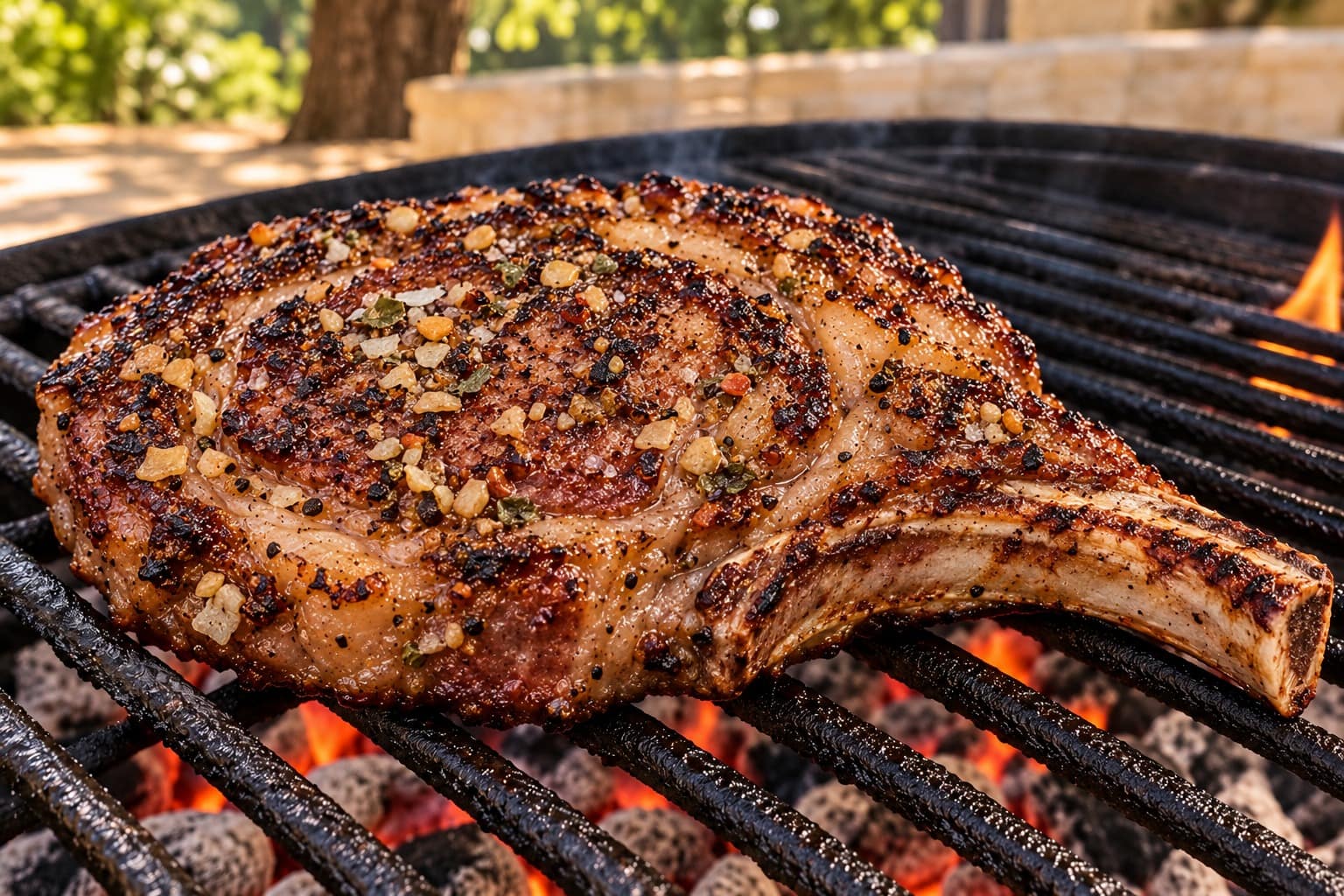
St. Louis Grill-Braised Pork Shoulder Steaks
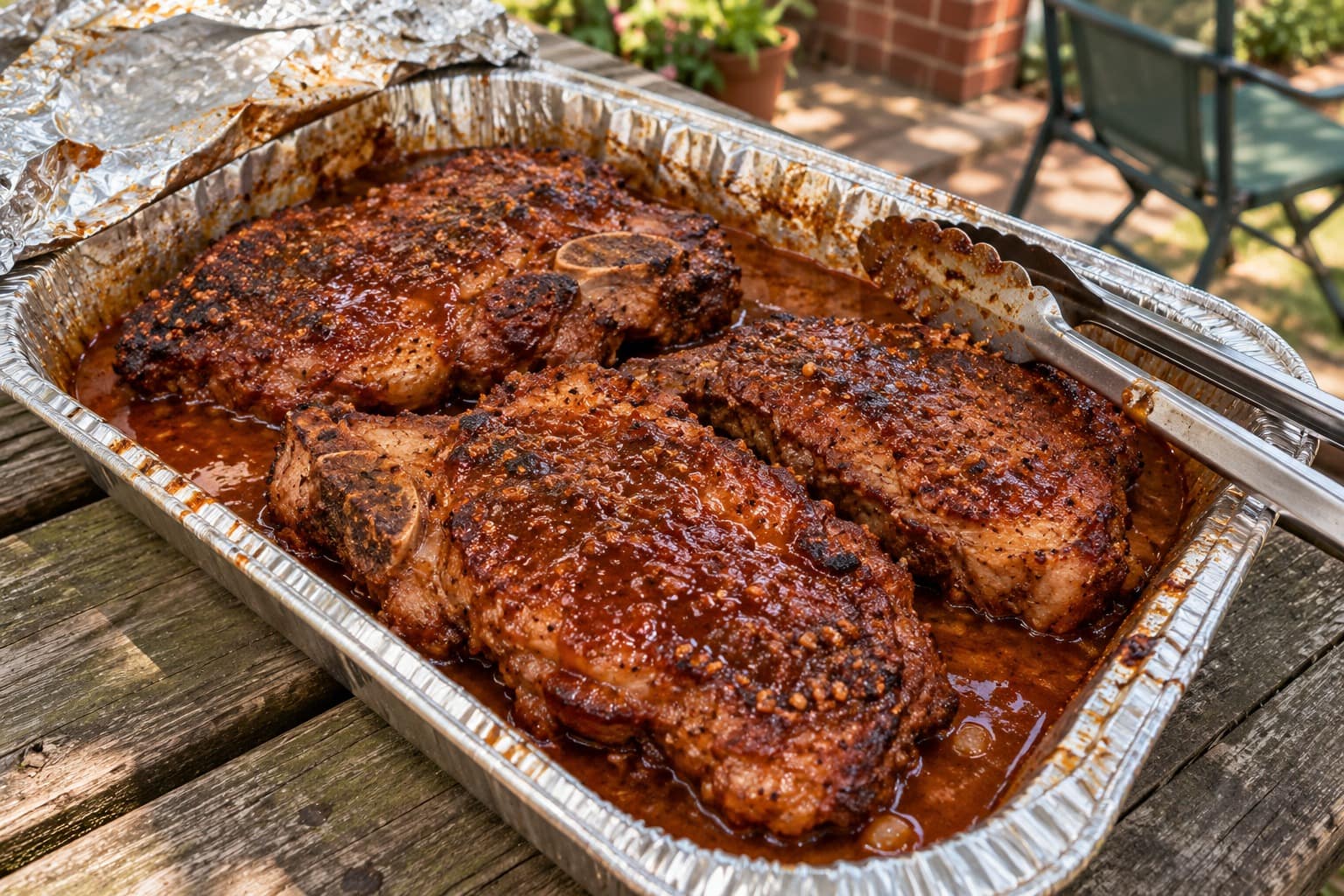
Pork steaks are cut from the shoulder, so they need a different plan from lean pork chops. Brown them over the grill, then let a covered pan and tangy sauce do the tenderizing.
St. Louis Grill-Braised Pork Shoulder Steaks
Featuring: St. Louis Ribs, Dry Rub Seasoning
Equipment: Covered grill, supported grill-safe pan, foil, thermometer
The starting ratio: 2 tablespoons rub for 3 pounds shoulder steaks; 1 cup sauce thinned with ½ cup apple juice and 2 tablespoons vinegar.
Ingredients
For the steaks
- 3 bone-in pork shoulder steaks, about 1 inch thick and 3 pounds total
- 2 tablespoons St. Louis Ribs, Dry Rub Seasoning
- 1 tablespoon neutral oil
- 1 small onion, thinly sliced
- 1 cup tomato-based barbecue sauce
- ½ cup unsweetened apple juice
- 2 tablespoons apple cider vinegar
Instructions
- Set up two zones. Prepare a covered grill with a direct medium-hot area and an indirect area that can hold about 300–325°F. Use a sturdy grill-safe roasting pan, or set a disposable foil pan on a rimmed metal sheet for support.
- Season and brown. Pat the shoulder steaks dry, coat with oil and rub, and grill over direct heat for about 3–4 minutes per side. Move away from flare-ups; this stage is for browning, not finishing.
- Make the covered pan. Spread the onion in the pan. Mix sauce, apple juice, and vinegar. Add the steaks and liquid, turning once to coat. Cover tightly with foil and place over indirect heat.
- Braise gently. Cook covered for about 1½–2¼ hours, checking near the earlier end. The meat should yield easily to a fork or skewer; shoulder steaks often reach about 185–195°F as they soften. Add a little hot water if the pan threatens to dry out. Continue in 15-minute increments if still firm.
- Rest and serve from the pan. Rest for 10 minutes. Spoon a little sauce over the steaks and bring the supported pan to the table with clean tongs. Divide the large steaks into portions as people are served.
Buy shoulder steaks, not center-cut loin chops. The fat and connective tissue are what make the gentle covered stage worthwhile.
Recipe notes
The rub and prepared sauce both contain salt, so begin without extra. Use the cooking temperature as a guide, then confirm tenderness with a skewer. For an indoor finish, the covered pan can go into a 325°F oven.
Serve it with
Serve with white bread, beans, and a crisp slaw. Keep the meal informal and let the sauce stay in the pan until people serve themselves.
Bring the pan to the table
Set the mop cup beside the smoker, give the pork steaks a pair of serving tongs, and let people help themselves. This is the sort of cooking that makes a jar worth keeping close: one seasoning, two cuts of pork, and an afternoon that ends with a good meal.
Explore St. Louis Ribs, Dry Rub Seasoning
Regional inspiration: Explore St. Louis: local foods and backyard pork steaks.
St. Louis Ribs - Dry Rub Seasoning
$12.50
If you're firing up ribs, give them a rub that knows what it's doing. St. Louis Ribs, Dry Rub Seasoning brings brown sugar, paprika, garlic, onion, smoked salt, ancho, black pepper, and a touch of red pepper together for the sweet,… read more

FAQs
Do I actually need a smoker to use this, or can I just fake it in my kitchen oven?
Go ahead and fire up the oven because our smoked salt will trick everyone's tastebuds into thinking you woke up at 4:00 AM to tend to a firepit. Your kitchen stays warm, your couch stays comfy, and your ribs still get that undeniable backyard swagger.
Is this blend strictly exclusive to ribs, or can my chicken wings get a taste of the action?
While St. Louis is in the name, this rub isn't monogamous and happily plays the field with chicken wings, thick-cut pork chops, and even your baked beans. Consider it a passport to flavor town for basically any protein that dares to cross your path.
Will this rub give me that perfectly caramelized barbecue crust, or will it just dissolve into a sad puddle?
Thanks to a generous helping of brown sugar, this blend is practically engineered to build a beautiful, legendary barbecue bark. It locks in the savory smoke and sweet heat so perfectly that your neighbors will start leaning over the fence to see what smells so good.